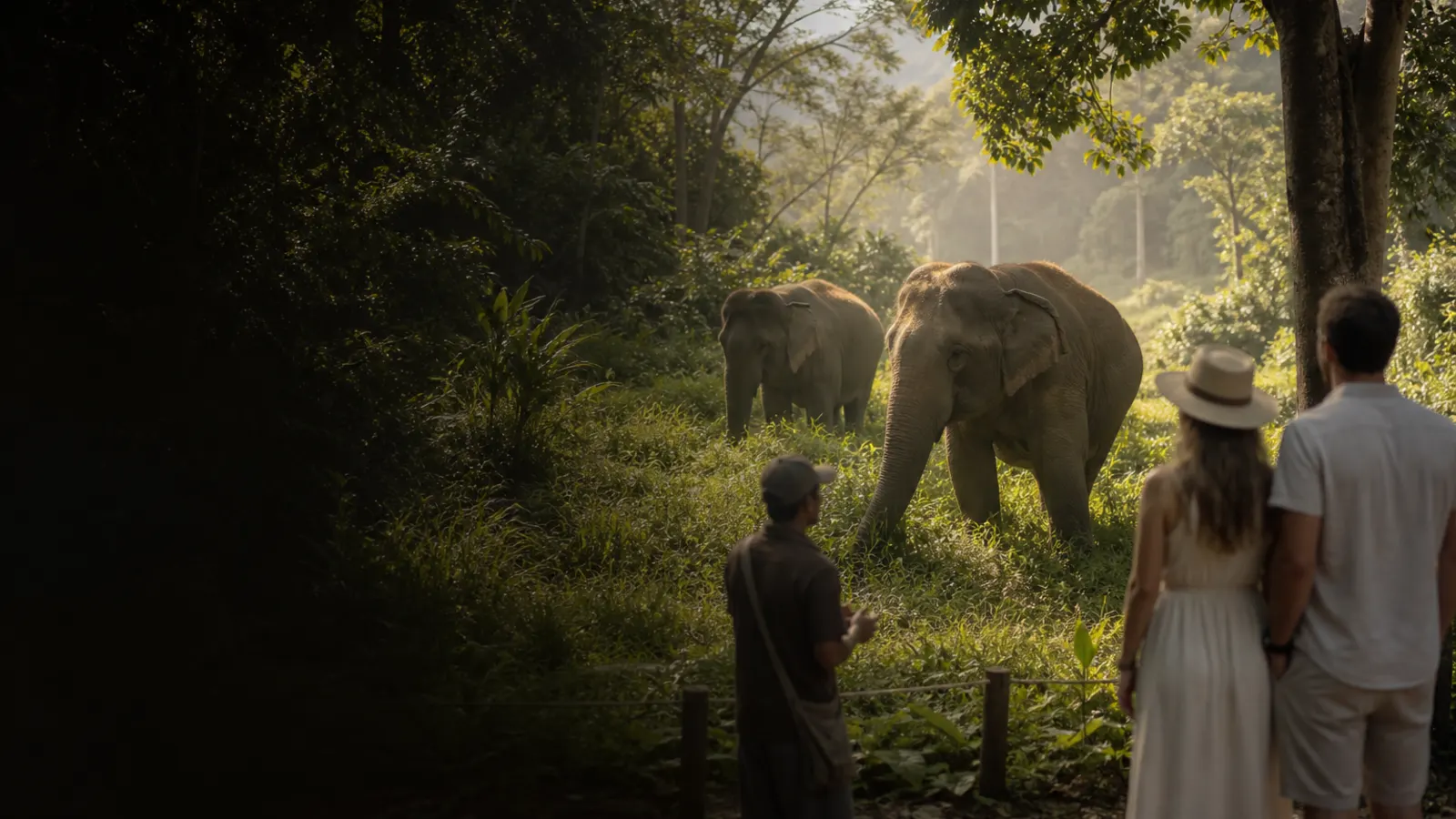
There is something quietly captivating about standing near an elephant. Even at rest, these remarkable animals seem to hold the landscape around them. Their size is undeniable, yet it is the delicacy of their movements that often stays with you: the curl of a trunk exploring the ground, the soft placement of each foot and the calm, unhurried rhythm of a herd moving together.
In Phuket, a carefully chosen elephant sanctuary can offer far more than a memorable wildlife encounter. It can be an opportunity to see elephants with greater respect, learn about their individual histories and support a more responsible future for elephant tourism.
Grace at an elephant’s own pace
Elephants have an elegance that photographs never quite capture. Their movements are deliberate without feeling heavy. They communicate through small gestures, remain alert to one another and show distinct personalities in the way they explore, forage and socialise.
A welfare-led sanctuary allows you to appreciate these qualities without asking the animals to perform. The most beautiful moments are often the simplest: watching an elephant choose its own route through a forested setting, gather food with astonishing precision or pause beside another member of the herd.
The experience feels meaningful because it is not built around constant interaction. You are a guest in their environment, given the time and space to observe.
What an ethical sanctuary visit should look like
An ethical elephant experience places animal wellbeing ahead of tourist entertainment. Phuket Concierge favours observation-led programmes where rescued elephants can move, forage and socialise naturally while knowledgeable staff explain their histories, behaviour and daily care.
There should be no riding, performances or guest bathing. These activities can make an encounter appear intimate, but they may place the visitor’s expectations ahead of the elephant’s comfort. A responsible programme establishes clear boundaries and allows each animal to decide how it spends its time.
Transparency matters too. Visitors should be able to understand the sanctuary’s approach to welfare, how interactions are managed and what care the elephants receive. Current practices can change, which is why they should be checked before a recommendation or booking is confirmed.
The important work behind the encounter
The peaceful experience seen by visitors is supported by a much larger daily commitment. Elephants require space, appropriate food, experienced carers, veterinary attention and routines shaped around their physical and behavioural needs. For animals that have previously worked in demanding or exploitative conditions, patient rehabilitation and consistent care are particularly important.
Sanctuaries also have an educational role. By sharing the elephants’ histories and explaining their natural behaviour, they help visitors understand why traditional entertainment-led encounters are being reconsidered. That knowledge travels home with every guest and can influence the choices they make elsewhere.
The best programmes do not pretend that every welfare question is simple. Instead, they encourage thoughtful observation, honest conversation and continued improvement.
Why visiting is a form of support
Tourism choices send a clear signal. When travellers choose welfare-led, observation-focused experiences, they direct their spending towards the practices they want to see continue. They also show the wider tourism industry that respectful wildlife encounters are valued.
Your visit can therefore support more than one memorable afternoon. It helps create demand for environments in which elephants are treated as animals with their own needs and choices—not as performers or props.
Support begins with selecting carefully. Look beyond attractive photographs and ask what the visit actually involves. Choose programmes that are open about their policies, avoid forced interaction and place education and elephant welfare at the centre of the experience.
A thoughtful half-day in Phuket
A sanctuary visit normally takes around half a day and works well for couples, families with older children, wildlife-conscious travellers and anyone interested in conservation and responsible tourism. Settings are often forested or rural, offering a quieter contrast to Phuket’s beaches and busy coastal areas.
Practical details matter. Walking surfaces, weather protection, transfers, age suitability and the sanctuary’s current interaction policy should all be confirmed in advance. Comfortable shoes, light clothing, sun protection and a willingness to move at the sanctuary’s pace will help you enjoy the visit.
For many guests, the experience becomes one of the most affecting parts of their stay—not because of a staged photograph, but because they were able to spend time observing extraordinary animals with care and attention.
Let the encounter stay with you
The elegance of an elephant lies partly in its strength, but also in its gentleness, intelligence and complete presence in the moment. Seeing that at close range can change the way you think about wildlife experiences.
Visit with curiosity. Listen to the carers. Notice the individual elephants and allow the encounter to unfold without demanding anything from them. By choosing a responsible sanctuary, you can leave Phuket with a beautiful memory while supporting a more respectful direction for elephant tourism.